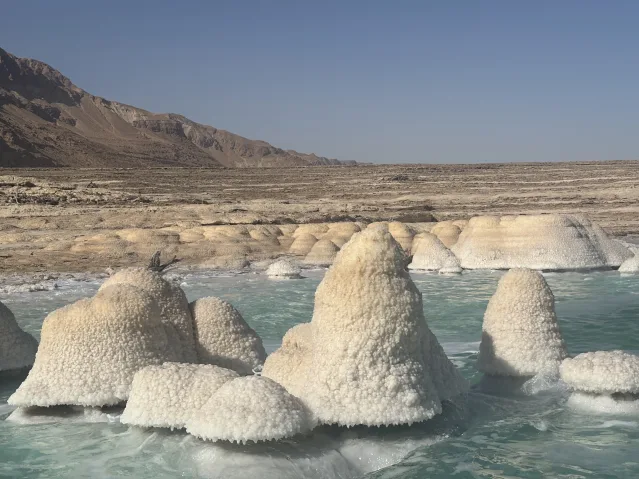
The motorboat cut through the aquamarine water of the Dead Sea, past dazzling-white formations forged from salt crystals. Jake Ben Zaken, the boat captain, pointed to a patch of darker water nearby indicating a sinkhole beneath the seabed. These are both signs of an unfolding ecological disaster, he said.
The Dead Sea sits where Israeli, Jordanian and Palestinian land meet and is a place of extremes. It’s the lowest point on the planet, around 1,400 feet below sea level. It’s also one of the world’s saltiest water bodies, nearly 10 times saltier than the ocean, which makes the water so dense people can float effortlessly on its surface.
But this unique body of water is dying. Every year it recedes around 4 feet, as the impacts of human activities and climate change take a heavy toll. Over the past five decades, its surface area has shrunk by roughly a third. As the water retreats, it’s forging a new landscape of sinkholes and salt-encrusted shorelines that is both strikingly beautiful and a haunting reminder that the Dead Sea’s future hangs in the balance.

Ben Zaken, who runs the company Salty Landscapes from Mitzpe Shalem, a settlement in the West Bank, has been taking people out onto the Dead Sea for more than 12 years. It’s given him a front row seat to the alarming changes.
His boat tours used to start from Mineral Beach, just to the south of Mitzpe Shalem, but he was forced to move when sinkholes closed it in 2015. His current location is safe for now, but the landscape is shifting fast. “Every year we get about seven and a half meters of new shoreline,” Ben Zaken said.
There are multiple plans to save the Dead Sea, but the years tick by and little happens as costs, fraught regional politics and a lack of political urgency stymie action, experts told CNN. Unless something is done, the world risks losing a unique ecosystem, they warned.
“It is a treasure,” said Peleg Gottdiener of EcoPeace Middle East, an organization of Israeli, Jordanian, and Palestinian environmentalists. “There’s nothing like the Dead Sea.”
Be First to Comment