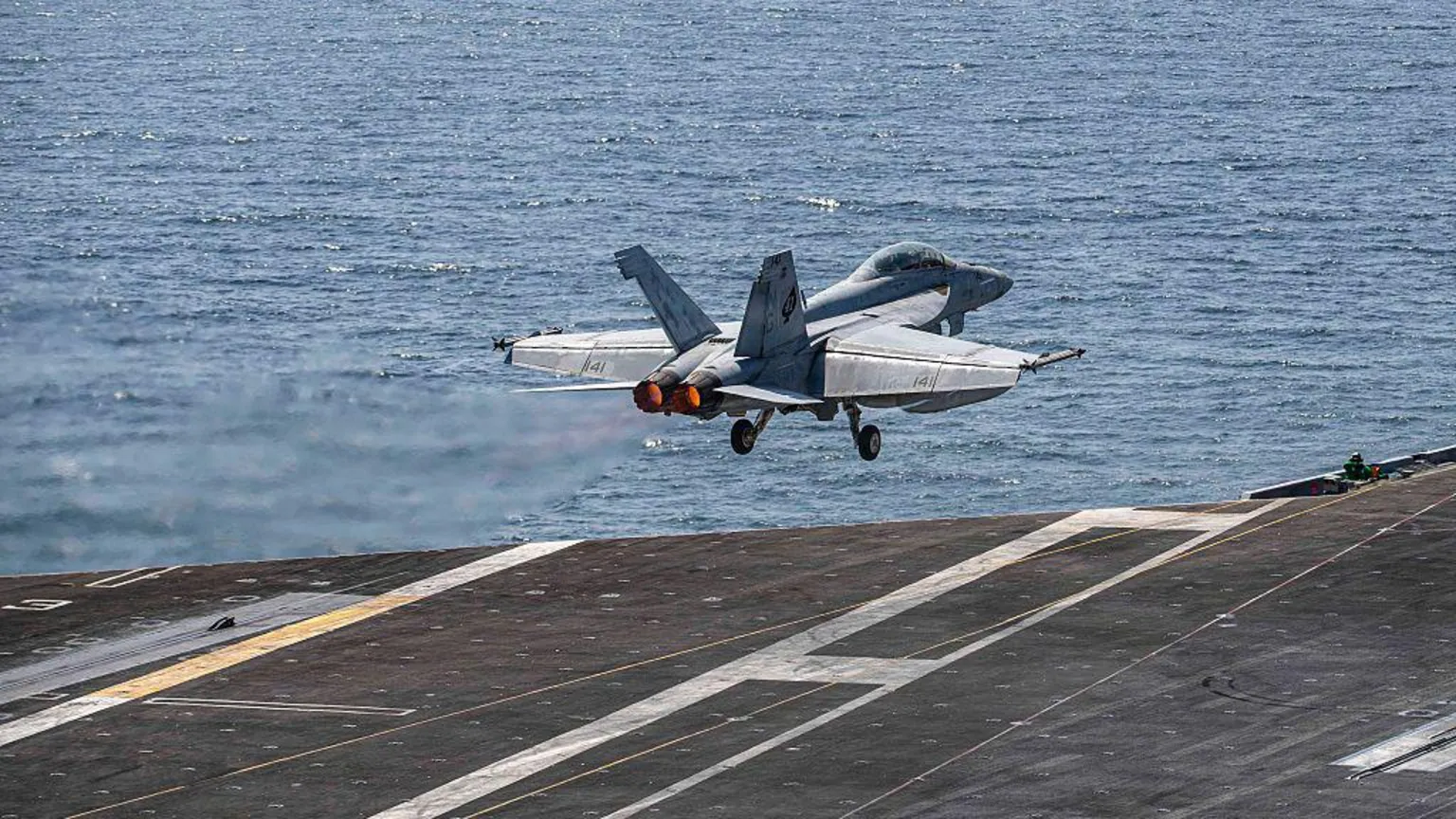
Iran’s Islamic Revolutionary Guard Corps (IRGC) has said it targeted an American air base in the region, after fresh US strikes on southern Iran overnight.
The IRGC did not say where the base was, but Kuwait, which hosts a US base, said it had intercepted “hostile missile and drone threats”.
The US military said Iran had launched a ballistic missile towards Kuwait that was successfully intercepted by Kuwaiti forces, without specifying whether it was aimed at its military base.
The Iranian missile launch came after the US shot down Iranian drones over the Strait of Hormuz and struck a military site in Bandar Abbas, a strategic port city in southern Iran.
The renewed hostilities threaten a fragile ceasefire between Washington and Tehran.
It is the second time in three days that the US has attacked targets in Iran – saying that the strikes were conducted in self-defence.
The IRGC said the attack on the US air base took place in the early hours of Thursday morning and targeted the site as it was “the source” of earlier US strikes on Iran, according to state broadcaster IRIB.
US Central Command (Centcom) said Iran’s attack on Kuwait was an “egregious ceasefire violation” that occurred “hours after Iranian forces launched five one-way attack drones that posed a clear threat in and near the Strait of Hormuz”.
It said all the drones were intercepted and that a sixth drone launched from an Iranian ground control site in Bandar Abbas was also prevented.
Centcom described its actions as “measured, purely defensive, and intended to maintain the ceasefire”.
Iranian foreign ministry spokesman Esmail Baqai meanwhile condemned the US strikes and said they constituted a violation of the ceasefire.
He added that the Islamic republic would “take all necessary measures to defend its national sovereignty”, according to quotes cited by IRIB.
Kuwait’s foreign affairs ministry strongly condemned what it termed “criminal Iranian attacks that targeted” its territory.
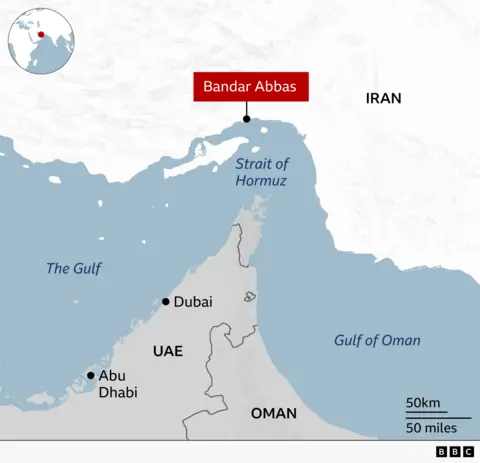
Earlier this week, the US confirmed a previous round of “self-defence” strikes on southern Iran on Monday in which they targeted Iranian missile sites and boats attempting to lay mines in the Strait, where thousands of commercial tanker ships are stranded as a result of the conflict.
Centcom said those strikes were designed “to protect our troops from threats posed by Iranian forces”.
The US also imposed sanctions on the “Persian Gulf Strait Authority” – the Iranian body tasked with collecting payments from ships travelling through the Strait of Hormuz.
Any ships that pay the authority could also be “exposed to the risk of sanctions”, the US Treasury Department said in a statement.
One-fifth of the world’s liquefied natural gas and oil normally pass through the shipping channel, and its closure has impacted global fuel trade.
Iran’s foreign ministry spokesman Baqai said on Monday that Tehran was collecting fees for “navigational services” and it would continue to manage traffic through the waterway.
Be First to Comment